


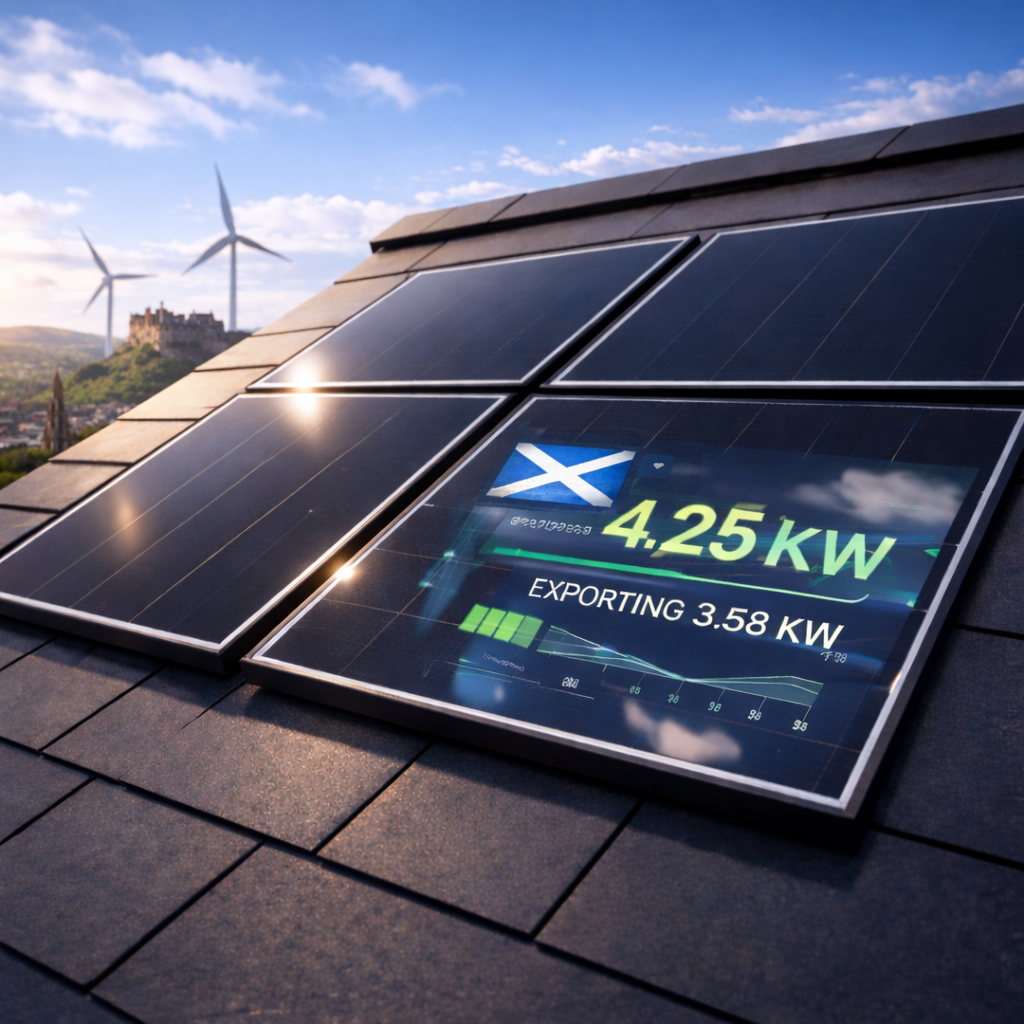
Rural vs Urban Solar in Scotland: What’s Actually Different?
On paper, solar panels are solar panels. Same tech, same sunlight, same physics.
In reality, where you live in Scotland makes a big difference to how solar works, what it costs, and what you’ll get out of it.
Rural and urban setups aren’t better or worse — they’re just different. Here’s what actually changes when you swap streetlights for sheep.
Roof Space: One Clear Winner
Let’s start with the obvious.
Rural Homes
- Bigger roofs
- Fewer obstructions
- More flexibility on panel layout
This makes it easier to:
- Install larger systems
- Optimise panel orientation
- Avoid shading altogether
Urban Homes
- Smaller roofs
- Neighbours, chimneys, dormers
- Tighter layouts
Urban solar works fine — it just needs more careful design.
Shading: Trees vs Tenements
Rural Areas
Shading usually comes from:
- Trees
- Hills
- Farm buildings
Often seasonal, sometimes manageable with trimming or layout changes.
Urban Areas
Shading tends to come from:
- Nearby buildings
- Shared walls
- Street-level obstructions
Harder to fix, harder to avoid.
This doesn’t kill solar — but it does affect output and system size.
Grid Connection: This Is the Big One
This is where rural and urban solar really part ways.
Urban Grid
- Stronger connections
- Fewer restrictions
- Easier approvals
Most urban homes can export solar electricity without much fuss.
Rural Grid
- Weaker connections
- Capacity limits
- Sometimes export restrictions
In rural areas, you may be told:
- You can’t export much
- Or you can’t export at all without upgrades
That changes the whole system design.
Why Batteries Matter More in Rural Areas
Because of grid limits, batteries often make more sense rurally.
They allow you to:
- Store electricity you can’t export
- Use more of your own solar
- Reduce reliance on a weaker grid
In urban areas, batteries are about convenience and control.
In rural areas, they’re often about necessity.
Power Cuts & Reliability
Rural Scotland sees:
- More frequent outages
- Longer restoration times
Solar alone won’t keep the lights on during a power cut — but solar + battery + backup setup can.
That setup costs more, but for some rural households, resilience matters as much as savings.
In urban areas, outages are usually shorter and less frequent — so backup power is less of a priority.
Installation Logistics (Not Glamorous, But Real)
Rural Installs
- Longer travel times
- More scaffolding
- Weather exposure
This can increase costs slightly — not because anyone’s taking the mick, but because it genuinely takes longer.
Urban Installs
- Easier access
- Shorter install times
- Tighter working spaces
Different challenges, different pricing pressures.
Planning & Visibility
Rural
- Fewer neighbours
- Less visual scrutiny
- Usually simpler planning
Urban
- Conservation areas
- Listed buildings
- More visibility
Urban installs sometimes need more paperwork — especially in older towns and cities.
So… Is Solar Better in Rural or Urban Scotland?
Neither. It’s just different.
Rural solar suits homes that:
- Have space
- Want larger systems
- Benefit from batteries
- Value resilience
Urban solar suits homes that:
- Have decent daylight access
- Want smaller, efficient systems
- Can export easily
- Prefer simpler installs
Both can work well — when designed for their reality.
The Big Mistake to Avoid
The biggest mistake is assuming:
“Solar works the same everywhere.”
It doesn’t.
Good systems are designed around:
- Location
- Grid constraints
- Usage patterns
- Long-term plans
Bad systems ignore all that and hope for the best.
The Bottom Line
Solar works in both rural and urban Scotland — but the reasons it works, and the way it’s designed, are different.
If your setup reflects where you actually live, solar can be a solid investment.
If it doesn’t, disappointment follows.
As usual, context matters.
👉 Want a Setup That Fits Where You Live?
Generic advice only gets you so far. Rural and urban homes need different thinking.
Compare solar systems designed for your location — clear options, realistic expectations, no nonsense.