


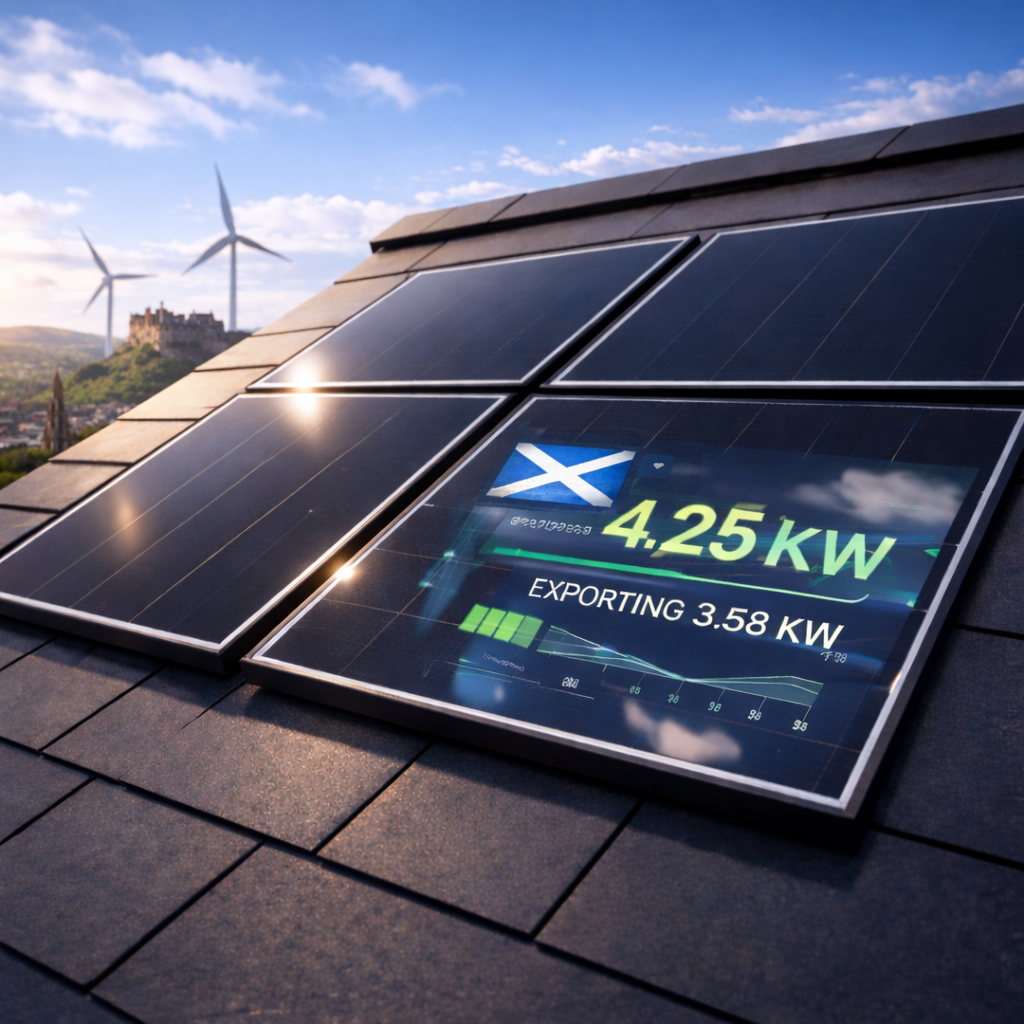
Understanding Solar Technology
Solar panels convert sunlight into electricity using photovoltaic cells. When sunlight hits these cells, it creates an electric field that generates power.
How Solar Panels Work: The Simple Version (No Physics Degree Required)
Solar panels might look clever — and they are — but the basic idea behind them is surprisingly straightforward. Light hits the roof, electricity comes out the other end, and your meter slows down a bit.
That’s the short version. Here’s the slightly longer one — explained plainly, without going full mad scientist.
Understanding Solar Technology
At the heart of every solar panel are photovoltaic (PV) cells. When sunlight hits these cells, it creates an electric charge. That charge flows as electricity, ready to be used in your home.
Even on cloudy Scottish days (and let’s be honest, there are a few), panels still generate power — just less than they would in full sunshine. It’s about daylight, not heat. If there’s light, there’s energy.
Simple as that.
The Main Parts of a Solar System
A typical home solar setup isn’t just panels on a roof. It’s a small team of components, each doing its own job.
Solar panels
These capture daylight and generate electricity.
Inverter
This converts the electricity from the panels into a form your home can actually use.
Optional battery storage
This stores surplus energy so you can use it later — in the evening, or when the sun’s clocked off early.
Each part matters, and how they’re matched together affects performance, savings, and long-term reliability.
(Which is why comparing systems properly matters — not just prices.)
What Happens to the Electricity?
When your panels produce electricity, it flows through your home first — powering appliances, lights, and whatever else happens to be on.
If you generate more than you’re using:
- Excess energy can be stored in a battery
- Or exported back to the grid
If you generate less than you need, your home simply draws the rest from the grid as normal. No switches to flick. No lifestyle overhaul required.
It all happens quietly in the background.
The Installation Process
Despite how technical it sounds, installing solar panels is usually straightforward.
For most homes:
- Installation takes 1–3 days
- There’s minimal disruption
- Planning permission isn’t usually required
Once installed, the system is tested, switched on, and left to get on with it.
No constant tweaking. No daily fiddling. Just steady output doing its thing.
Does Solar Actually Work in Scotland?
Short answer: yes.
Scotland might not get Mediterranean sunshine, but modern solar panels are designed for efficiency, not heat. Germany, for example, produces more solar power than the UK — and their weather’s not exactly beachy either.
The key is:
- Realistic expectations
- A properly designed system
- Honest performance estimates
Which comes back to choosing the right setup in the first place.
Why Understanding the Basics Helps
You don’t need to be an expert — but knowing the basics helps you:
- Ask better questions
- Understand quotes and recommendations
- Avoid overpaying for kit you don’t need
Knowledge is power.
Solar knowledge just happens to save you money as well.
The Bottom Line
Solar technology isn’t magic — it’s clever engineering that quietly turns daylight into usable energy. Once installed, it’s low-maintenance, reliable, and designed to last decades.
Understand the basics, choose your system carefully, and let it get on with the job.
No fuss. No nonsense. Just energy, bottled a bit differently.
👉 See How Solar Could Work for Your Home
If you want to understand what kind of system makes sense for your roof — and compare options without guesswork — you can do it in a couple of minutes.
See your solar prices and compare systems — clear, simple, and no pressure.