


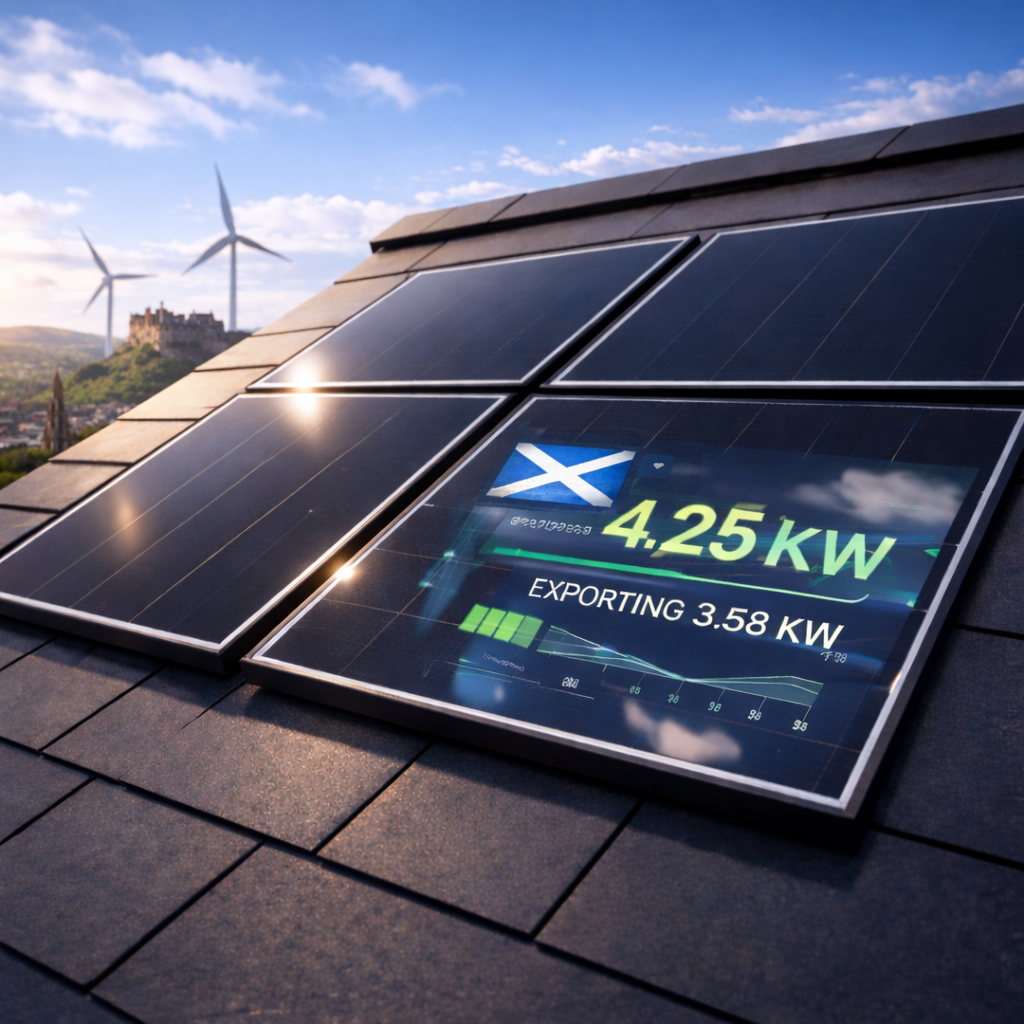
Solar Panels in Scotland: The Real Pros & Cons (No Sugar-Coating)
Solar panels get sold as a simple win: cleaner energy, lower bills, future-proof living.
In Scotland, the truth is a bit more nuanced.
Solar can work well here — but only if you understand what it does well, where it struggles, and what actually matters day to day. This isn’t a hype piece. It’s the grown-up version.
The Pros: Where Solar Works Well in Scotland
Let’s start with the positives — because there are plenty.
1. Daylight Is What Matters (And We Get Plenty of It)
Despite the jokes, solar panels don’t need blazing sunshine — they need daylight.
Scotland gets long daylight hours in spring and summer, which helps balance out darker winters. Over a full year, a well-sized system can still generate a useful amount of electricity.
It’s about annual output, not one dreich afternoon in January.
2. Lower Reliance on the Grid
Every unit of electricity your panels generate is one you don’t have to buy.
That means:
- Less exposure to price rises
- More predictable energy costs
- Better control over household spending
Add a battery, and that control increases further — especially in the evenings.
3. Works Well With Modern Lifestyles
Solar suits homes where:
- Someone’s in during the day
- Appliances run regularly
- Electric cars or heat pumps are involved
It quietly fits into daily life without needing constant attention — which is how most people want their energy to behave.
4. Long-Term, Not Short-Term
Solar panels are built to last 25+ years.
That makes them:
- A long-term cost reducer
- A hedge against future energy prices
- A sensible upgrade for homeowners planning to stay put
It’s not exciting — but it’s solid.
The Cons: Where Expectations Need Managed
Now the bits that get glossed over.
1. Winter Output Is Lower (No Getting Round It)
Scottish winters mean:
- Short days
- Low sun angles
- Reduced generation
Solar still produces electricity — just less of it. Anyone promising otherwise is overselling.
The trick is designing systems that perform well across the year, not pretending winter doesn’t exist.
2. Upfront Cost Is Real
Solar isn’t cheap.
Even with incentives and 0% VAT, you’re looking at a proper investment. Savings come later — not immediately.
If upfront cost is a stretch, solar might still work — but financing options and expectations need handled carefully.
3. Not Every Roof Is Ideal
Solar performs best on:
- Clear, unshaded roofs
- Reasonable pitch
- Good structural condition
It can work outside those conditions — but performance and value vary. Cookie-cutter advice doesn’t help here.
4. Payback Takes Time
In Scotland, solar typically pays back over:
- Several years
- Not several months
That’s normal. It doesn’t make solar bad — it just makes it a long-game decision.
If someone needs instant returns, solar may not suit their priorities.
What Actually Makes the Difference
More than weather. More than brand.
The biggest factors are:
- System design
- Installation quality
- Household energy use
- Whether a battery is included
Two identical houses can have very different results depending on how the system’s specified.
That’s where comparisons matter more than headlines.
So… Is Solar a Good Idea in Scotland?
For many homes, yes.
Solar works best when:
- You plan to stay put
- You understand seasonal variation
- You’re happy with steady, long-term savings
It’s not about chasing perfection — it’s about making sensible improvements that add up over time.
The Bottom Line
Solar in Scotland isn’t a miracle — and it isn’t a mistake.
It’s a practical tool that works well when expectations match reality.
Know the pros. Accept the cons.
Do the sums properly.
That approach usually works — in energy, and in Scotland generally.
👉 Want to See How Solar Performs for Your Home?
General advice only goes so far. The real answers are in the numbers for your roof, usage, and setup.
Compare solar options and see realistic performance estimates — clear, independent, no nonsense.